
People all over the world — many without a lot of electronics experience — have built this aquarium pH measurement and control circuit both cheaply and easily.

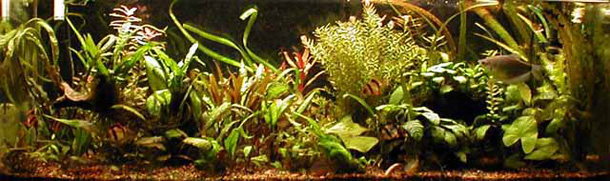
IntroductionPlanted aquarium enthusiasts have long known that carbon dioxide (CO2) is the limiting nutrient in their tanks, and that tanks with CO2 supplementation can have aquatic plant growth that borders on the miraculous. But adding CO2 means tracking its concentration — too low an addition rate or excessive water movement can result in insufficient CO2 levels, whereas too much CO2 can stress or even kill fish. A pH measurement and control system is the best way to know and control CO2 and pH levels, but for many people the equipment required has been prohibitively expensive.
The answer to this dilemma is to build your own pH measurement and control system, something which is within the budget and skill of many aquarists. This pH measurement and control system has been made as simple and straightforward as possible. The idea was to make it an fun and easy project, even for people without a lot of of electronics experience (but see the disclaimer at the end of this article). It was was designed to be reliable and forgiving. For example, electrical "noise" from the aquarium lights and heaters (a common problem) is filtered out in this circuit so that even an input with a lot of AC noise will give good results. Finally (and importantly for many) this circuit was designed using inexpensive and easy-to-find parts — everything for this project is available from the local Radio Shack store. (The one exception is the pH probe, which is available for about $40 from Amazon.com.)
The less electronically skilled, the less ambitious, and the busy may want to consider building the simplest possible pH meter or just buying a pH meter.
Getting Started
You can print a copy of this project's complete schematic diagram if you want to have it available as you read the explanatory text.
There is a parts list as well. Note that there aren't many parts: an inexpensive ph probe, two op amp ICs, a voltage regulator IC, a power supply, some sort of display (a voltmeter or panel display), and some passive components (resistors and capacitors).